What was the challenge or problem to be solved?
In certain industrial environments, the generation of by-products and residual materials is inherent to the production process itself. However, when these wastes are not fully characterized, they can become a technical, environmental, and economic risk factor.
The project originated from the need to gain an in-depth understanding of the nature of the generated waste and to establish objective criteria for selecting the most appropriate decontamination strategy.
Industrial waste in production processes
The client’s context was marked by the recurring appearance of industrial waste in production processes whose composition was not clearly defined. This uncertainty hindered proper classification and conditioned decision-making regarding treatment.
Beyond mere regulatory compliance, there was a strategic need to determine whether the waste resulted from a specific deviation, a change in raw materials, or an unforeseen interaction between materials. In some cases, the incorporation of new components linked to material innovation processes can alter the chemical profile of the generated waste, introducing variables not initially considered.
Lack of waste characterization can lead to inefficient decisions and unnecessary cost overruns in waste management.
The issue was not limited to the physical accumulation of waste. It also affected internal traceability, process stability, and the planning of costs associated with external treatment. Without proper characterization, any decision could prove overly conservative or, conversely, technically and regulatorily insufficient.
Decontamination strategy
The main objective of the project was to define a decontamination strategy based on robust analytical data. The aim was not merely to eliminate the waste, but to understand its nature in order to apply the solution most consistent with its actual composition.
An effective strategy had to consider the potential presence of hazardous compounds that could affect handling, storage, or transport conditions. The absence of detailed information could imply unnecessary risks for personnel, facilities, or the environment.
The client sought to reduce uncertainty and move toward safer and more sustainable management, aligned with technical and environmental criteria. The selected strategy needed to be defensible from a regulatory standpoint and economically proportionate, avoiding both overmanagement and underestimation of risk.
Industrial waste analysis
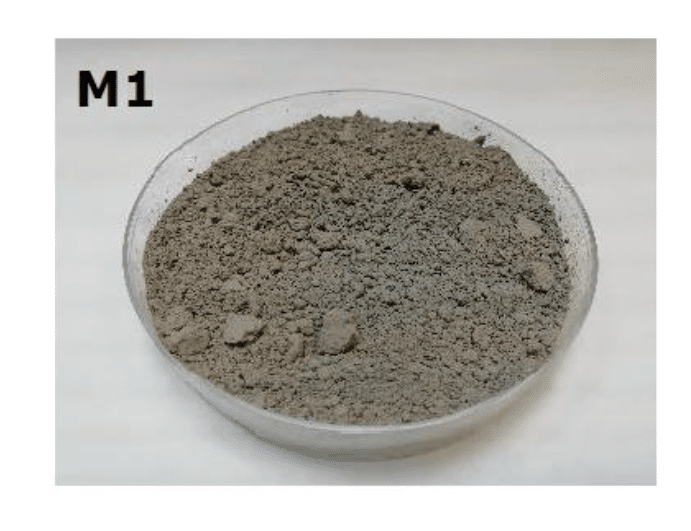
The main technical challenge lay in the analysis of industrial waste with a complex and heterogeneous matrix. The samples showed possible combinations of solid phases and surface traces whose characterization required a structured methodological approach.
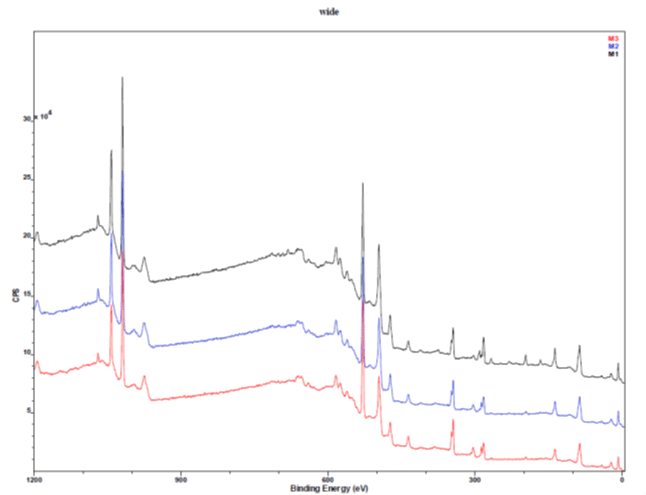
In addition to conventional analytical techniques, advanced methods had to be considered when the nature of the waste required it. In certain cases, techniques such as X-ray photoelectron spectroscopy (XPS) enable the analysis of surface chemical composition and the oxidation state of the elements present, providing key information to interpret mechanisms of waste formation or transformation.
The use of advanced techniques enables the identification of non-obvious compounds that impact the decontamination strategy.
The challenge was not limited to identifying major components, but also to interpreting their relevance within the production process. INFINITIA approached the project from an integrated perspective, combining analytical data with technical knowledge of the industrial environment, thereby transforming instrumental results into operational conclusions.

How was it addressed or what was the solution?
The solution was structured around a progressive approach that combined analytical characterization, technical interpretation, and strategic evaluation. The objective was not to produce a purely descriptive report, but to build a solid foundation for informed decision-making.
Chemical characterization of waste
The starting point was the chemical characterization of waste using techniques selected according to the nature of the samples. An analytical plan was designed to identify both the main components and potential minor species with regulatory or environmental impact.
This process made it possible to establish a clear view of the overall composition of the waste and to assess its classification according to technical criteria. When necessary, specific fractions were further studied to understand their potential behavior under physical or chemical treatment.
The characterization provided detailed knowledge that served as a basis for discarding preliminary hypotheses and focusing the analysis on those elements truly critical to the decontamination strategy.
Identification of industrial contaminants
Once the general composition had been defined, the next step was the identification of industrial contaminants that could condition subsequent management. This analysis made it possible to differentiate between structural components of the process and contamination associated with external variables.
The detailed study of specific traces helped establish correlations between certain process stages and the appearance of particular compounds. This approach made it possible not only to propose treatment solutions, but also to identify opportunities for improvement at the source.
The integration of analytical results with production process analysis avoided oversimplified conclusions. A technical diagnosis was developed that allowed decisions to be justified before production, quality, and environmental departments.
Industrial waste management
With the analytical basis consolidated, alternatives for industrial waste management consistent with the identified composition and the client’s operational constraints were evaluated.
Different treatment scenarios were analyzed, considering technical feasibility, economic impact, and compatibility with existing facilities. This evaluation made it possible to discard unnecessarily complex solutions and focus the decision on options proportionate to the actual level of risk.
A data-driven strategy reduces risks, optimizes costs, and improves process sustainability.
The outcome was the definition of a well-founded technical strategy that transformed a situation of uncertainty into a structured decision-making framework. The success of the project lay in providing analytical clarity and technical criteria to select the most appropriate alternative, reducing risks and optimizing resources.