
What was the challenge or problem to be solved?
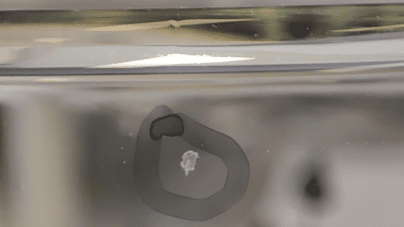
The unexpected breakage of several glass cups when hot liquids were poured into them led to the need for a technical study to determine whether the issue was related to a thermal shock phenomenon, internal stresses derived from the manufacturing process, or specific material defects.
The objective was to identify the root cause of the failure and define preventive measures to avoid recurrence.
Glass failure analysis in consumer products
The project was framed within a glass failure analysis applied to a consumer product subjected to significant thermal changes during normal use. The manufacturer needed to determine whether the breakage was due to a structural limitation of the material, a deviation in the manufacturing process, or a design issue.
In glass materials, effective strength largely depends on factors such as surface quality, the presence of microcracks, and residual stresses generated during cooling. Although the glass may present adequate nominal strength, small imperfections can significantly reduce its safety margin against thermal loads.
Glass can fail without visible prior deformation, making early detection of issues difficult.

Therefore, the analysis had to consider not only the type of glass used, but also its thermal treatment, thickness, and geometry, assessing whether the observed behaviour was consistent with the intended service conditions.
Root cause of failure associated with hot liquids
The study was approached from a root cause analysis perspective, with the aim of identifying the root cause of the failure rather than merely describing the visible fracture. Different hypotheses related to the behaviour of glass when exposed to hot liquids were evaluated.
The possible existence of non-uniform internal residual stresses resulting from insufficiently controlled thermal processing was analysed, as well as the presence of surface microdefects that could act as crack initiation points. In brittle materials, such defects significantly reduce resistance to thermal gradients.
It was also examined whether the combination of thickness, design, and heating rate could generate critical stress concentrations in specific areas. The client required a technically substantiated conclusion to define concrete corrective actions.
Thermal shock breakage and internal stresses in glass
One of the central aspects was to assess potential thermal shock breakage and its relationship with internal stresses in glass. Thermal shock occurs when different areas of the material experience significant temperature differences within a short period of time, generating internal stresses that may exceed fracture strength.
The fracture pattern was analysed to identify the crack initiation point and its propagation, distinguishing between a surface origin associated with a specific defect and a global phenomenon linked to thermal loading.
Small temperature differences can generate stresses high enough to cause glass fracture.
The technical challenge was to determine whether pouring hot liquid was the direct cause of the fracture or whether it acted as a trigger for a pre-existing weakness. This distinction was essential in order to establish appropriate preventive measures.
How was it addressed or what was the solution?
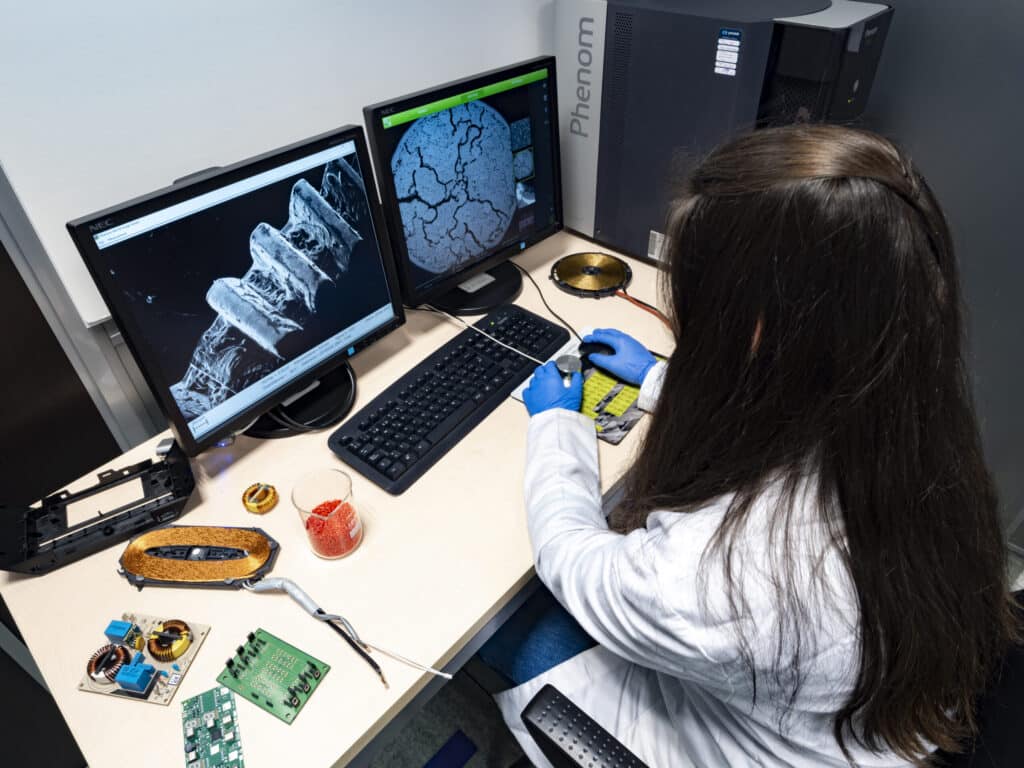
The project was carried out using a structured materials forensic engineering methodology, combining fractographic analysis, glass characterisation, and experimental evaluation of its thermal behaviour. INFINITIA’s team applied a systematic approach aimed at obtaining objective and verifiable evidence.
Materials forensic engineering applied to glass
From a materials forensic engineering perspective, the study began with a detailed inspection of the fracture surfaces, using appropriate observation techniques to identify characteristic features of the failure mechanism. Fractographic analysis made it possible to locate the crack initiation point, determine the propagation sequence, and establish whether the fracture occurred instantaneously or progressively.
Typical brittle fracture patterns in glass were evaluated, such as radial marks, arrest lines, and transition zones, which provide information about crack propagation direction and the stresses involved. The possible presence of surface defects, inclusions, or microcracks acting as stress concentrators was also examined.
This phase made it possible to rule out causes incompatible with the observed morphology, such as direct mechanical impacts or previous damage unrelated to thermal use. The analysis did not focus solely on the fracture origin, but integrated the interaction between material, geometric design, and thermal service conditions, avoiding attributing the problem to a single factor without experimental support.
In addition, the manufacturing history of the glass and its possible influence on the generation of residual stresses were considered, a key element in understanding the material’s susceptibility to sudden temperature changes.
Thermal resistance testing and technical evaluation
To validate the proposed hypotheses, thermal resistance tests were carried out to reproduce conditions comparable to real use. The glass was subjected to controlled thermal gradients, simulating the pouring of hot liquids into pieces at room temperature.
Variables such as the initial temperature of the material, the temperature of the added liquid, the rate of heat transfer, and stress distribution as a function of cup thickness and geometry were analysed. These variables are critical in the generation of internal stresses associated with thermal shock.
Experimental validation is key to distinguishing between isolated defects and material limitations.
The evaluation made it possible to quantify the material’s behaviour under sudden temperature changes and to estimate its safety margin. It was determined whether the level of thermal loading applied during normal use approached the glass’s resistance limit or whether a sufficient operational margin existed.
The repeatability of the phenomenon under controlled conditions was also assessed, in order to rule out the possibility of an isolated event or an exceptional combination of factors. This experimental approach allowed an objective correlation between laboratory results and the behaviour observed in service.
Root cause analysis to prevent future breakage
The set of evidence obtained made it possible to structure a robust root cause analysis, integrating the results of the fractographic study, material characterisation, and thermal testing performed. This integration was key to establishing a coherent relationship between the fracture mechanism and real operating conditions.
Based on this diagnosis, technical recommendations were defined to reduce the probability of recurrence. Potential measures included adjustments to the glass thermal treatment to minimise residual stresses, reinforcement of surface quality control, or revision of the thermal resistance specifications required for the product.
The need to redefine usage limits communicated to the market was also considered if the analysis indicated that certain conditions exceeded the material’s actual capacity.
The final outcome provided an objective technical basis for decision-making, delivering verifiable criteria that enhance product reliability under thermal loading and reduce exposure to future incidents.