
What was the challenge or problem to be solved?
Detecting issues in products once they are already on the market represents one of the most complex scenarios for quality and manufacturing teams. When a component begins to show breakages or anomalies under real operating conditions, it is essential to quickly analyze what has happened and determine whether the issue is due to a manufacturing defect, unexpected usage conditions, or a combination of multiple factors.
In this context, the client needed to understand why certain metal components had started to fail from a specific production period. The objective was not only to identify the root cause of the problem but also to ensure that it would not recur in future production and to prevent potential safety risks associated with product use.
Hinge failures detected in products on the market
When failures occur in products already in use, the available information about the exact conditions under which the failure took place is usually limited. In many cases, there are no detailed records of usage, applied loads, or events leading up to the component’s failure. This requires the investigation to be approached from a broad perspective, considering different possible scenarios.
In this specific case, several hinge failures had been detected in products already in service. Breakages began to appear in components manufactured from a certain production period, raising questions about potential changes in the manufacturing process, materials used, or product usage conditions.
When a failure occurs in products already in use, the lack of information about real operating conditions makes the investigation significantly more complex.

In addition to the economic impact associated with replacing parts or handling claims, failures in structural components can pose a safety risk to end users. For this reason, the client initiated a specific study to understand the origin of the problem and define preventive measures to avoid recurrence.
The analysis had to consider that the evaluated components came from different batches and production dates, requiring comparison between samples to identify relevant differences.
Identification of the root cause of failure in components
The main objective of the project was to conduct an investigation to identify the root cause of the observed failures. This required analyzing the affected components, evaluating their mechanical behavior, and studying the conditions under which fractures could occur.
A key part of this process involves distinguishing between different types of failure mechanisms. For example, a fracture may result from a sudden overload, fatigue over time, manufacturing defects, or a combination of factors that progressively weaken the component.
The investigation also needed to assess whether visible defects in the components could affect their mechanical performance. In some cases, small surface irregularities or imperfections in the production process can act as stress concentration points that promote fracture under certain loading conditions.
To establish reliable conclusions, it was necessary to compare failed components with others that had not shown issues, evaluating whether significant differences existed between them. This comparative approach helps identify patterns and better understand the conditions that may lead to failure.
Complexity of failure analysis in metal components
Failure analysis in metal components requires considering multiple factors that may influence material behavior. These include mechanical properties, usage conditions, component design, and possible defects associated with the manufacturing process.
When failures occur in products already in service, complexity increases due to the lack of complete information about the component’s history. Unlike laboratory testing, where conditions are controlled, products in use may have been subjected to varying loads, handling conditions, or unforeseen situations.
Failure analysis is not only about identifying what broke, but understanding why it happened and under which conditions it could happen again.
For this reason, the investigation required a comprehensive approach that considered both component characteristics and possible usage conditions that could have contributed to the failure.
In this type of project, expertise in forensic engineering is especially relevant. This approach makes it possible to analyze evidence present in damaged components to reconstruct events and understand the mechanisms that ultimately led to failure.
How was it addressed or what was the solution?
Once the problem and objectives were defined, the INFINITIA team developed a work plan focused on gathering evidence, analyzing the affected components, and evaluating their mechanical behavior. This approach enabled a structured progression from reviewing existing information to performing targeted tests to validate the proposed hypotheses.
The work combined different inspection, analysis, and testing techniques to obtain a comprehensive understanding of component behavior and the factors influencing failure.
Failure investigation through forensic engineering
The first step involved reviewing available documentation and previous studies related to similar component failures. This phase helped identify the most common fracture types in such components and establish a knowledge base to guide the investigation.
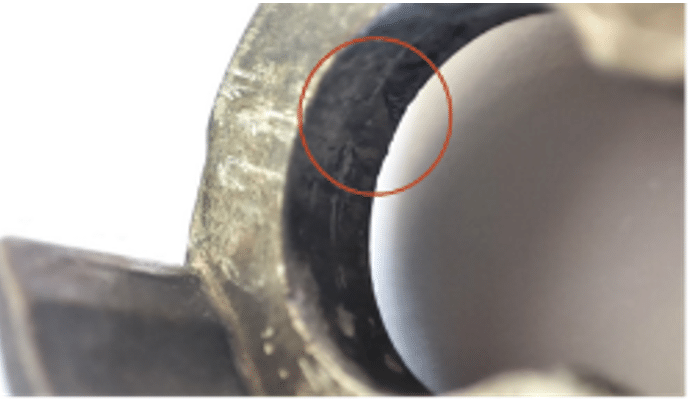
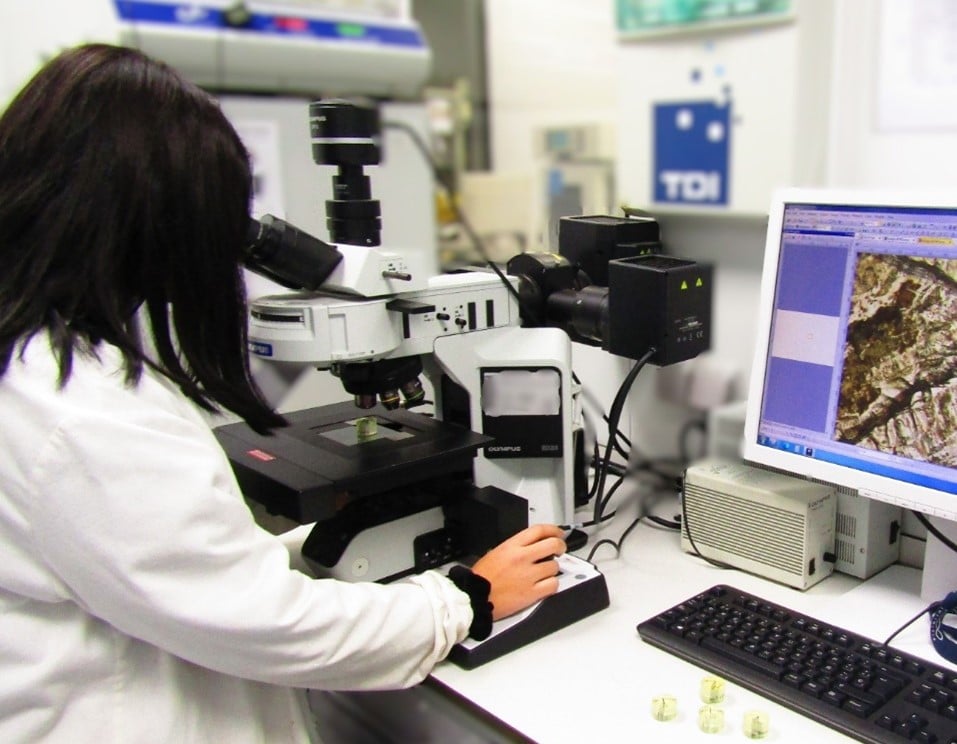
A detailed visual inspection of the available samples was then carried out. Magnification tools were used to closely examine component surfaces and detect possible signs of manufacturing defects or usage-related marks.
During this phase, components from different production periods were analyzed to identify potential differences. This comparative approach is key in failure investigations, as it helps reveal patterns that explain why some components fail while others do not.
The examination of fracture surfaces also provided valuable insights into the failure mechanism. In many cases, fracture characteristics reveal important information about the stresses experienced by the component and how the failure propagated.
Mechanical testing for failure analysis
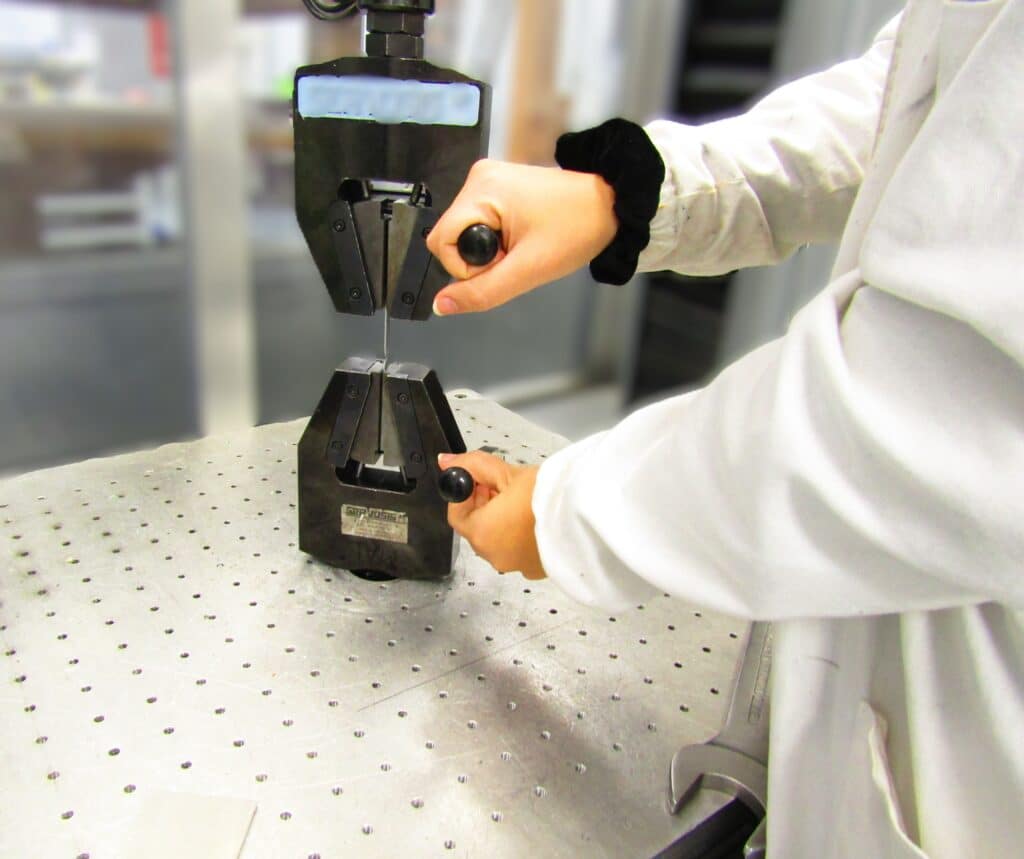
After analyzing the visible characteristics of the components, the next step was to evaluate their mechanical behavior through specific testing. An experimental setup was designed to reproduce real usage conditions in a controlled laboratory environment.
These tests are essential to understand how a component behaves under specific loads or configurations. In this case, the goal was to evaluate hinge resistance in its actual working position and assess how detected defects could influence performance.
Testing was carried out using a universal testing machine, allowing controlled loads to be applied and component behavior to be recorded. This enabled comparison between different samples, including those with visible defects and those without apparent irregularities.
Reproducing real operating conditions in the laboratory makes it possible to understand how small variations in loading or positioning can lead to component failure.
The analysis of the results helped identify how certain conditions could generate stresses higher than those considered in the original design, which was key to interpreting the failures observed in market samples.
Identification of the cause of hinge failure in market conditions
The combined analysis of inspection findings and mechanical test results made it possible to identify the factors contributing to component failure. The fractured hinges showed characteristic marks indicating that they had been used in a position different from their intended design. This misalignment created a configuration in which the loads applied to the hinge were higher than originally expected.
Under these conditions, the presence of minor manufacturing defects could act as initiation points for fracture, ultimately leading to failure under elevated stress conditions. These findings made it possible to explain why certain components had failed in service and to define recommendations aimed at reducing the likelihood of recurrence.
The diagnosis helped the client better understand the origin of the issue and implement preventive measures in both design and quality control processes. This type of investigation is particularly valuable for products already in use, as it enables rapid action to improve safety and reliability.
Additionally, the study highlighted the importance of combining different analytical tools, such as visual inspection, fracture analysis, and mechanical testing, to fully understand component behavior under real operating conditions.