What was the challenge or problem to be solved?
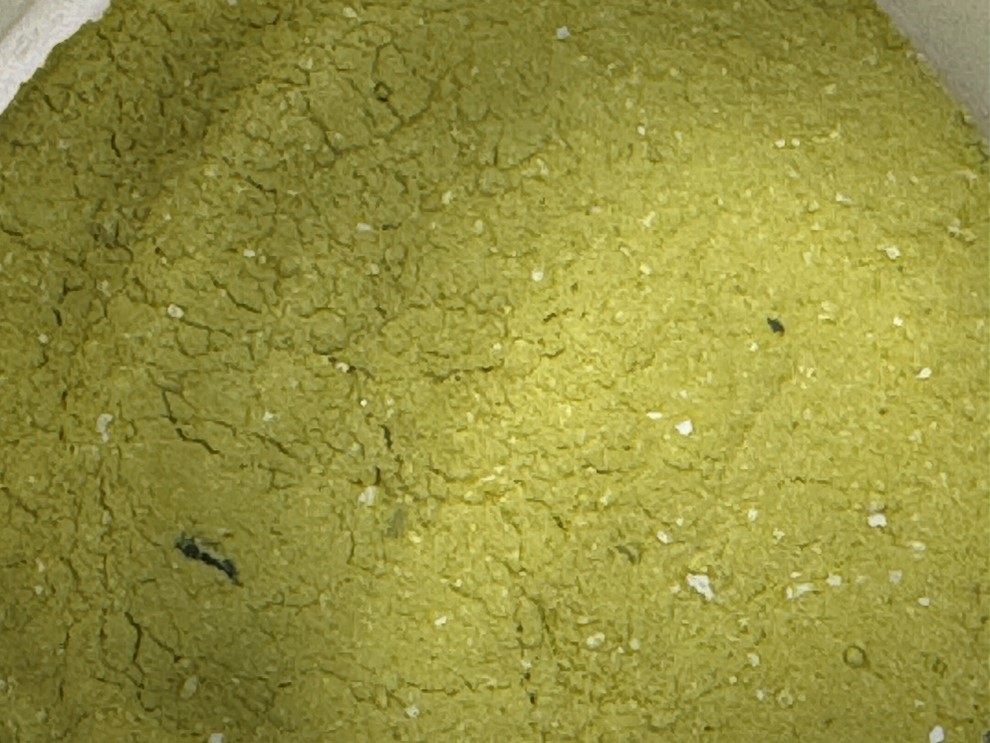
In certain industrial processes linked to waste management, material streams may appear whose composition is not fully identified. This lack of information represents a technical, economic, and regulatory risk, particularly when there is suspicion of potentially hazardous contaminants.
In this context, the need arose to accurately characterize a series of samples of uncertain nature, whose treatment required proper classification to ensure appropriate waste management.
Heavy metals in unknown samples and risk in waste management
The starting point was the detection of possible heavy metals in unknown samples generated within an industrial process. The absence of prior characterization prevented determining whether the waste should be considered hazardous, whether it could be recovered, or whether it required specific treatment.
The presence of certain metallic elements can decisively influence waste classification, storage, transport, and final destination. Without clear identification, any decision could lead to regulatory non-compliance or unnecessary costs derived from overly conservative management.
Early identification of metallic contaminants prevents misclassification and reduces unnecessary operational costs.
The client required objective information on the actual composition of the material to minimize risks and optimize decision-making. The objective was not only to detect contaminants but also to quantify and contextualize them within an appropriate technical and regulatory framework, initially supported by semi-quantitative contaminant results.
Chemical analysis of heavy metals for waste classification
The main objective of the project was to perform a chemical analysis of heavy metals to determine the concentration of the elements present and assess their impact on waste classification. This information was essential to define whether the material could be recovered or had to be managed as hazardous waste.
The need was not purely analytical. The aim was to obtain a determination of chemical composition that could serve as a technical basis for strategic decision-making within the production process. Proper characterization could reduce costs associated with external treatment and prevent legal contingencies.
Furthermore, the client required a structured approach that would allow the results to be integrated into their environmental management system. Therefore, the study had to provide robust quantitative data interpreted from both technical and regulatory perspectives.
Reverse engineering applied to substance identification
The technical challenge did not lie solely in measuring concentrations but in addressing the problem from a reverse engineering perspective. The samples lacked reliable prior information regarding their chemical origin or the compounds present.
This scenario required designing a strategy beginning with proper sample preparation, ensuring representativeness and preventing cross-contamination that could alter analytical results.
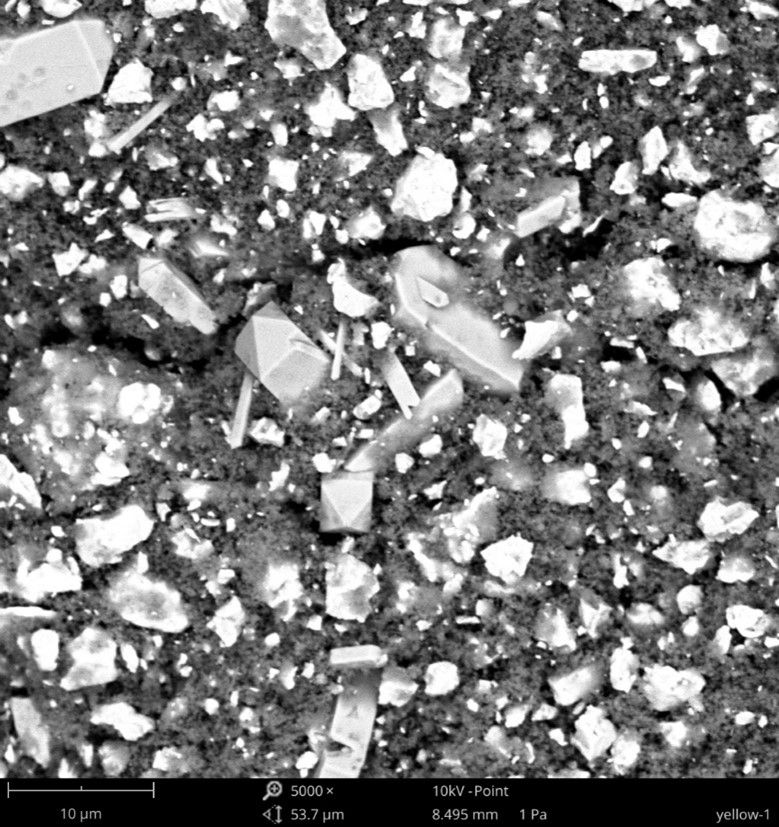
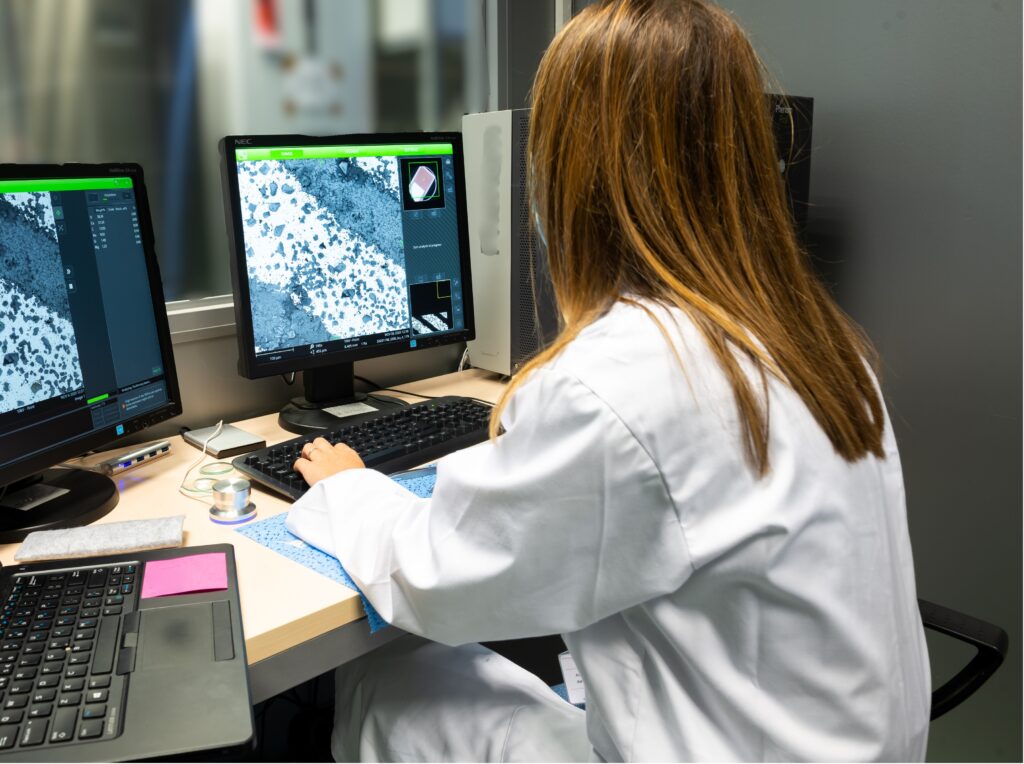
Preliminary stages included inspection using an optical microscope to evaluate morphology, heterogeneity, and potential differentiated phases. The study was subsequently complemented with scanning electron microscopy coupled with an X-ray detector (SEM/EDX), enabling localized elemental information and supporting the identification of substances within the matrix.
Combining techniques such as optical microscopy and SEM/EDX enables key insights even in samples with no traceability.
The complexity increased due to the potential variability of the material. In industrial waste processes, heterogeneity can be significant, requiring a rigorous methodology to ensure the technical validity of the conclusions.
In this context, INFINITIA structured the study to transform an unknown sample into actionable technical information, reducing uncertainty associated with the management process.
How was it addressed or what was the solution?
The adopted approach combined instrumental analysis, technical interpretation, and regulatory contextualization. The objective was not merely to obtain analytical data but to integrate it into a coherent strategy supporting industrial decision-making.The adopted approach combined instrumental analysis, technical interpretation, and regulatory contextualization. The objective was not merely to obtain analytical data but to integrate it into a coherent strategy supporting industrial decision-making.
Chemical characterization and structured elemental analysis
The project began with a chemical characterization strategy aimed at identifying the elements present in the samples. This approach provided a preliminary compositional profile and detected the presence of relevant metals.
Elemental analysis was carried out systematically, prioritizing elements that, by their nature, could influence classification as hazardous waste. Quantitative data allowed evaluation of actual concentrations against regulatory thresholds.
The applied methodology prevented premature conclusions. Results were interpreted considering potential interferences, detection limits, and sampling variability, ensuring the reliability of the study.
Reverse engineering and technical evaluation of composition
Once analytical data were obtained, they were examined from a reverse engineering perspective. This approach enabled reconstruction of the potential nature of the material and its origin within the industrial process.
Interpretation went beyond listing concentrations. The consistency of results with the production process was assessed, taking into account raw materials, intermediate transformations, and potential sources of cross-contamination.
The INFINITIA team integrated analytical findings with the client’s operational context. This phase was critical in translating technical data into useful conclusions for waste classification and management optimization.
Waste management and data-driven decision-making
The final outcome of the project was the establishment of a solid technical basis that enabled redefinition of the strategy associated with the analyzed samples.
With the information obtained, the client was able to objectively determine whether the material had to be treated as hazardous waste or whether recovery under specific conditions was feasible. This clarity reduced operational uncertainty and facilitated regulatory compliance.
Accurate chemical characterization turns uncertainty into technically sound, regulation-aligned decisions.
Beyond numerical values, the project provided a replicable methodological framework for future cases involving unknown samples. The combination of chemical analysis, technical interpretation, and regulatory contextualization transformed an ambiguous issue into a well-founded decision.
The success of the project was demonstrated by accurately identifying and semi-quantifying heavy metals in all analyzed samples, providing the client with detailed information to make strategic decisions regarding waste management. This approach delivered clear and reliable information that enabled proper waste handling, ensured regulatory compliance, and minimized potential environmental and health risks.