Misalignment between test conditions and service conditions
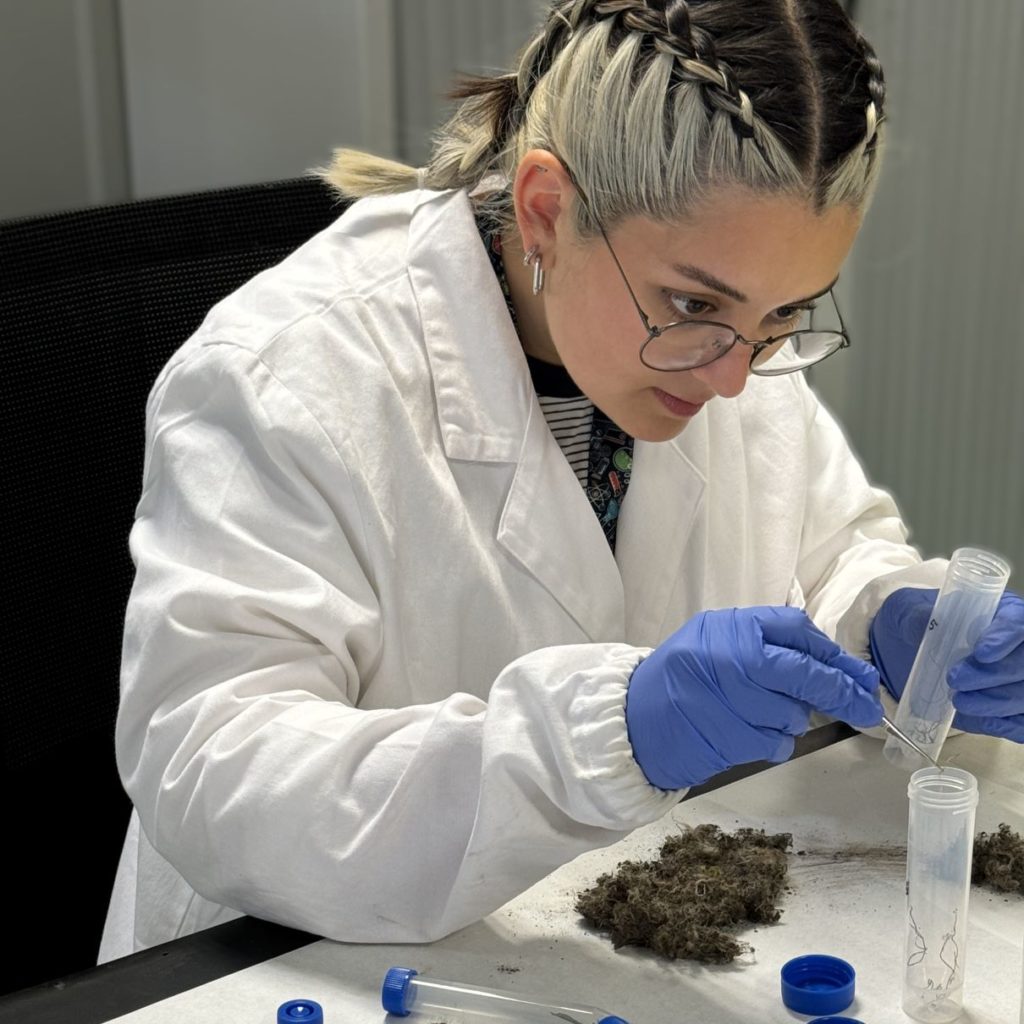
One of the main issues associated with a laboratory test is insufficient is the lack of correspondence between the controlled laboratory environment and the real conditions in which a component operates. This misalignment is not usually evident in early development stages, as tests are designed to be reproducible and comparable, not necessarily representative of a specific application.
In industrial practice, components are subjected to complex combinations of mechanical, thermal, chemical and environmental stresses. However, laboratory tests tend to isolate variables to facilitate analysis, which can eliminate critical interactions between factors. This leads to an oversimplification of the problem.
A test may be technically correct and still not represent the actual behavior of the component in service.
Another relevant aspect is that many real conditions are difficult to reproduce in a controlled manner. For example, random load variations, undefined operating cycles or intermittent exposure to aggressive agents. These non-linear conditions are precisely those that often trigger failure mechanisms not detected in laboratory testing.
In addition, test design is often based on prior assumptions about possible failure mechanisms. If these assumptions are incomplete or incorrect, the test may fail to evaluate the truly critical factors.
Therefore, the misalignment between laboratory and reality is not an isolated issue, but a structural one in many validation processes.
Laboratory testing vs real conditions in materials subjected to multiple variables
The comparison between laboratory testing vs real conditions shows that industrial environments are rarely dominated by a single variable. In most cases, materials operate under the simultaneous influence of mechanical load, temperature, humidity and chemical agents.
In the laboratory, these variables are usually evaluated independently. For example, a mechanical strength test is performed at constant temperature, or a corrosion test is carried out without mechanical load. This separation facilitates analysis but removes synergistic effects that may be critical.
A typical case is stress corrosion, where the combination of mechanical stress and chemical environment produces failures that do not appear when both factors are evaluated separately. This type of non-linear phenomenon is difficult to capture in conventional testing.
The interaction between variables such as load, temperature and environment can trigger failures that do not appear in isolated tests.
In addition, real conditions often include temporal variations, such as temperature changes or load cycles. These variations can activate fatigue mechanisms or progressive degradation that do not manifest under static conditions.
Therefore, the main limitation is not the accuracy of the test, but its ability to integrate the complexity of the real environment.
Factors affecting laboratory results in uncontrolled industrial environments
The factors affecting laboratory results are particularly critical when compared with uncontrolled industrial environments. In the laboratory, variability is minimized to obtain reproducible results, but in real service, variability is inherent to the system.
One of the most relevant factors is the dispersion in operating conditions. Equipment operating across different temperature ranges, variable loads or non-uniform usage cycles generates more complex behavior than that evaluated in laboratory conditions.
Another key factor is interaction with the environment. The presence of contaminants, variable humidity or exposure to radiation can significantly alter material behavior. These variables are usually outside the scope of standard testing.
Material variability also plays a role. Differences in manufacturing processes, heat treatments or dimensional tolerances can introduce dispersion not reflected in carefully selected laboratory samples.
Finally, human and operational factors introduce additional uncertainty, such as assembly conditions, maintenance practices or unintended use, which are difficult to simulate in laboratory testing.
Limitations of accelerated testing in lifetime prediction
Accelerated testing is a common tool to reduce validation time, but it presents important limitations when used to predict long-term behavior. A laboratory test is insufficient in this context often due to incorrect interpretation of accelerated results.
Process acceleration is based on the idea that certain degradation mechanisms can be intensified by increasing variables such as temperature or load. However, not all mechanisms respond proportionally to these increases.
In some cases, acceleration can activate failure mechanisms different from those occurring under real conditions. This leads to results that are not directly extrapolable, even if the test has been properly executed. In addition, the models used to extrapolate results are often based on simplifications that do not capture the complexity of real behavior, introducing uncertainty in lifetime prediction.
Accelerating a test can change the failure mechanism, not just its rate of occurrence.
On the other hand, the combination of variables in accelerated tests can generate unrealistic conditions, far from any real use scenario. This may lead to overly conservative or even incorrect conclusions.
As a result, accelerated tests must be interpreted with caution and always in combination with other methodologies.
Limitations of accelerated tests in non-linear degradation mechanisms
The limitations of accelerated tests become evident when degradation mechanisms do not follow linear behavior. In such cases, increasing temperature or load does not simply accelerate the process but may completely alter it.
For example, in polymer materials, an increase in temperature can shift the dominant degradation mechanism from oxidation to thermal degradation. This means that the failure observed in the laboratory does not correspond to what would occur under real conditions.
In metals, accelerating fatigue processes can alter how cracks initiate and propagate, generating patterns different from those observed in service. In addition, some phenomena require long times to develop, such as chemical species diffusion or microstructural damage accumulation. These processes cannot always be accelerated without altering their nature.
Therefore, the validity of an accelerated test depends on whether the observed mechanisms are equivalent to real ones, which is not always the case.
Laboratory-field correlation in materials lifetime studies
Laboratory-field correlation in materials is one of the main challenges in lifetime studies. Establishing a reliable relationship between accelerated results and real behavior requires a deep understanding of failure mechanisms.
This correlation is often based on mathematical models that relate variables such as temperature or load to degradation rate. However, these models have limitations when applied outside the conditions for which they were calibrated.
Furthermore, variability in real conditions introduces dispersion that is not reflected in laboratory results. This makes model validation more difficult and reduces predictive capability. In many cases, the lack of reliable field data limits the ability to properly adjust models, forcing reliance on conservative assumptions.
For this reason, correlation must be approached as an iterative process, combining testing, failure analysis and real-world data.
Cases where laboratory testing does not detect the real failure
In many industrial projects, it is observed that failures not detected in laboratory testing only appear when the component enters service. These situations highlight the insufficiency of prior testing.
These failures are usually associated with specific conditions that were not considered in the experimental design. In many cases, they involve combinations of variables or transient situations that are difficult to reproduce.
In addition, laboratory tests typically focus on nominal conditions, whereas real failures occur under extreme or out-of-spec conditions. Another relevant factor is test duration. Some mechanisms require long periods to manifest, which is not always compatible with product development timelines.
These discrepancies require a reassessment of validation strategies and the incorporation of more representative methodologies.
Failures not detected in laboratory testing under transient operating conditions
Failures not detected in laboratory testing are often directly linked to transient conditions such as start-ups, shutdowns, load changes or rapid thermal variations. These situations generate non-steady states that are rarely considered in conventional tests, which are usually designed under stable and controlled conditions. However, in real operation, many components experience these transients repeatedly, and it is during these moments that the highest levels of stress occur.
During these transients, complex phenomena may arise, such as thermal stresses caused by temperature gradients, local pressure variations or changes in material mechanical properties. These conditions can activate specific failure mechanisms, such as crack initiation, delamination or localized deformation, which do not appear under constant conditions. In addition, these effects are often cumulative, meaning their impact is progressive rather than immediate.
Many failures originate during start-ups or regime changes, not under steady operating conditions.
A representative case is components subjected to rapid thermal cycles, where differential expansion between materials or within different regions of the same component generates internal stresses. Even if the component performs correctly under steady-state conditions, repeated cycles can lead to thermal fatigue and eventual failure. This type of behavior is not usually detected in standard tests that do not include dynamic variations.
The main difficulty in capturing these phenomena in laboratory testing lies in reproducing complex time-dependent sequences and variable conditions. This requires not only specific equipment but also a detailed understanding of the real operating profile. For this reason, the absence of these transients in experimental design is one of the most common causes of discrepancies between laboratory results and field performance.
Failure reproduction in laboratory as an advanced diagnostic tool
Failure reproduction in laboratory is an advanced methodology that addresses the limitations of standard testing when these fail to explain behavior observed in service. Unlike conventional tests, this approach does not rely on generic conditions but on the need to replicate a specific failure under controlled conditions.
The process begins with a detailed analysis of the real failure, identifying the key variables that may have contributed to its occurrence. This includes not only material-related factors but also operating conditions, environmental influences and potential deviations from intended use. Based on this information, specific tests are designed to reproduce the phenomenon, adjusting parameters until the failure can be consistently replicated.
One of the main advantages of this approach is its ability to validate hypotheses about the failure mechanism with high reliability. By reproducing the failure, it becomes possible to isolate variables and analyze their influence, facilitating root cause identification. In addition, this controlled environment allows potential solutions to be evaluated before implementation in real conditions, reducing risk.
However, failure reproduction requires a high level of technical expertise and a well-founded diagnostic phase. It is not a tool that can be applied systematically, but rather in cases where conventional testing is insufficient. Therefore, it should be understood as a complement within a broader analysis and validation strategy.
Test validity in real context
A laboratory test being insufficient should not be interpreted as an error, but as a limitation inherent to the concept of testing when facing the complexity of industrial environments. Tests are designed to be controlled, repeatable and comparable, but these same characteristics imply a simplification of reality that can be critical in certain contexts.
The main technical implication is that laboratory results must be interpreted within their scope and should not be directly extrapolated to service conditions without prior analysis. Factors such as variable interaction, the presence of transient conditions or environmental variability can lead to significant deviations from laboratory-observed behavior.
To reduce this gap, more integrated approaches combining different methodologies are required. Failure reproduction, validation under real conditions and detailed analysis of degradation mechanisms help complement laboratory data and improve predictive capability. In cases where there are doubts about test representativeness or result interpretation, it may be useful to rely on specialized technical analysis.
In an increasingly demanding industrial context, reliability cannot be assessed solely through standardized testing. Results must be contextualized, their limitations understood, and additional tools applied to approximate real system behavior.