
What was the challenge or problem to be solved?
In industrial processes based on electrochemical reactions, electrode performance directly influences operational stability, energy consumption, and final output quality. When progressive deviations in performance or unexpected reductions in efficiency are detected, the impact may translate into maintenance costs, unplanned downtime, and overall efficiency losses.
In this context, the need arose to conduct a specific study focused on evaluating electrode durability under real operating conditions.
Electrode durability in real operating environments
The client observed that, after a certain period of operation, the system began to show variations in its electrochemical behavior. Although the electrodes met the initial technical specifications, field performance did not remain stable over time. This situation created uncertainty regarding process stability and the actual service life expectancy of the component.
The analysis needed to go beyond a simple verification. A durability analysis was required that considered specific operating conditions, including medium composition, applied electrical parameters, and real working cycles. Only in this way could it be determined whether the observed evolution was due to normal wear or to an accelerated degradation phenomenon.
Real electrode durability depends not only on the material, but on its interaction with the specific operating environment.

Moreover, real operating environments introduce variables that are not always reproduced in standard testing. Minor fluctuations in temperature, concentration, or duty cycle can significantly affect the surface behavior of the electrode. For this reason, the evaluation had to focus on evidence obtained in service or under highly representative conditions.
This approach made it possible to transform an operational perception into a technically grounded diagnosis, avoiding decisions based solely on assumptions or theoretical laboratory data comparisons.
Electrode service life focused on system optimization
The project was not limited to determining how long the electrodes functioned before requiring replacement. The objective was to thoroughly understand which factors were influencing electrode service life and how they could be adjusted to improve process stability.
Service life optimization required analyzing performance loss trends, identifying potential surface alterations, and assessing whether structural changes were associated with prolonged use. This information was essential to establish objective maintenance criteria and define technical intervention thresholds.
From a strategic perspective, extending service life does not always depend exclusively on the material itself. In some cases, minor adjustments to operating conditions can reduce the degradation rate without modifying the design. In others, it may be necessary to review material selection or the type of coating applied.
The adopted approach aimed to differentiate between these scenarios, providing technical information that enabled the client to make well-founded decisions aligned with reliability and cost objectives.
Degradation mechanisms in industrial electrodes
One of the main challenges of the study was identifying the degradation mechanisms responsible for the observed evolution. In electrochemical systems, electrode degradation may result from complex processes such as localized corrosion, surface passivation, detachment of active layers, or microstructural changes induced by the operating environment.
These phenomena can develop progressively and simultaneously, making direct identification difficult. In many cases, there is no abrupt failure, but rather a gradual efficiency loss that only becomes evident through detailed comparative analysis.
Degradation rarely results from a single cause; it is usually the outcome of multiple mechanisms acting simultaneously.
It is also common for multiple mechanisms to act at the same time. For example, a slight surface alteration may promote secondary reactions that accelerate further deterioration. Without proper characterization, these interactions may go unnoticed.
INFINITIA’s role was to structure the analysis from an integrated perspective, isolating variables and correlating experimental evidence with the functional performance of the system. This approach avoided oversimplified conclusions and enabled a technically coherent interpretation consistent with real operating conditions.
How was it addressed or what was the solution?
The study was designed to correlate electrochemical performance with potential physical and chemical transformations detected after use. The strategy combined comparative analysis between initial and final states, detailed technical characterization, and contextual evaluation of operating conditions.
Testing under real operating conditions as a validation criterion
The foundation of the project was to prioritize testing under real operating conditions or scenarios as close as possible to the operational environment. This decision reduced the gap between experimental results and actual plant performance, avoiding excessive extrapolation from idealized scenarios.
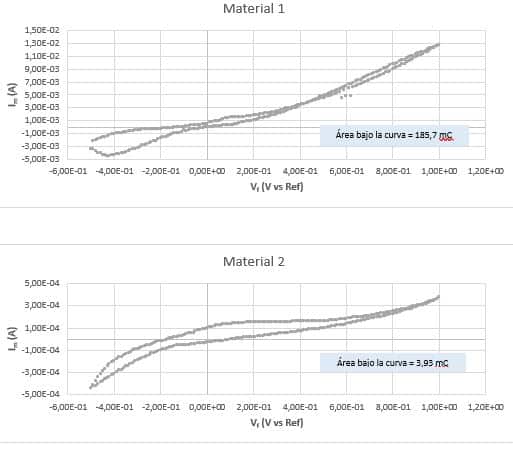
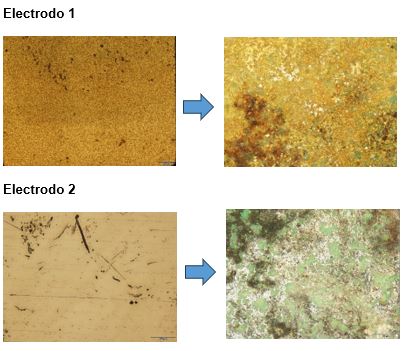
New electrodes and others subjected to real service cycles were analyzed. This direct comparison enabled a performance evaluation based on tangible evidence, identifying variations in electrochemical activity and potential surface modifications.
The analysis did not focus solely on isolated electrical parameters. The objective was to understand how the entire system evolved and whether repetitive patterns associated with operating time could be identified. This approach made it possible to detect trends that are not always visible in isolated inspections.
Furthermore, evaluation under representative conditions ensured that the findings were consistent with the client’s operational experience, strengthening the reliability of the conclusions.
Durability analysis through integrated technical characterisation
The durability analysis relied on a combination of characterisation techniques aimed at obtaining a comprehensive view of the electrode’s condition. Electrochemical aspects were evaluated together with potential surface alterations and microstructural changes that could explain performance evolution. For detailed surface examination and identification of localized deterioration phenomena, Scanning Electron Microscopy (SEM) was used, enabling the observation of morphological modifications associated with degradation processes.
The integration of results was a key element of the approach. Rather than interpreting each parameter independently, INFINITIA’s technical team correlated the collected data to identify plausible cause–effect relationships. This method allowed differentiation between wear inherent to operation and processes that might be accelerating degradation.
Combining analytical techniques enables moving from problem observation to understanding its root cause.
External variables related to the operating environment were also analyzed. In some cases, factors such as medium composition or operating regime can have an impact comparable to or greater than that of the electrode material itself. Evaluating these interactions was essential to avoid incomplete diagnoses.
The combination of experimental characterisation and critical analysis provided a solid basis for formulating technical recommendations aligned with the actual process conditions.
Service life optimization as a result of the study
Based on the results obtained, the factors limiting electrode durability were identified and action lines were defined to optimize service life. These recommendations focused on reducing the degradation rate and improving long-term system stability.
The added value of the project lay in converting technical data into clear operational criteria. The generated information enabled adjustments to operating parameters, revisions of maintenance strategies, and evaluation of potential improvements in design or material selection.
The study also reduced uncertainty regarding the future behavior of the electrodes. Having a structured understanding of the mechanisms involved facilitates medium-term planning and minimizes the risk of unexpected failures.
Overall, INFINITIA’s intervention transformed a recurring issue into an opportunity for improvement based on rigorous, contextualized technical analysis oriented toward strategic decision-making.