
What was the challenge or problem to be solved?
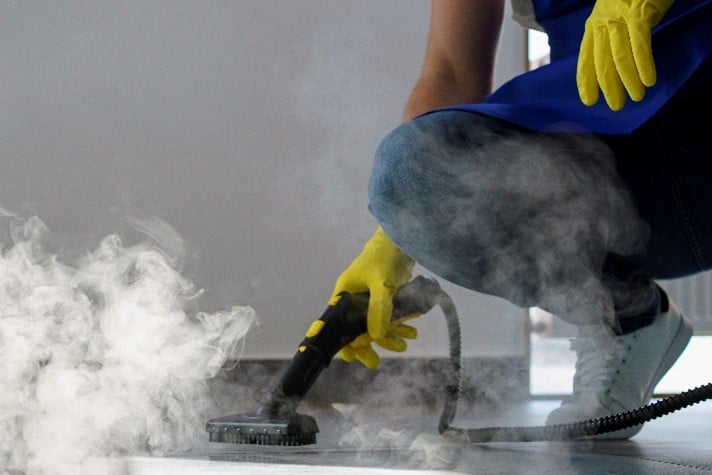
The project originated from the need to assess the real-world performance of a steam disinfection system applied to textiles and surfaces. The objective was to validate its effectiveness, identify technical limitations and define potential improvements prior to industrial scaling.
Industrial context of steam disinfection in textiles
The application of this technology to textiles responds to a growing demand for effective hygienic solutions that minimize reliance on chemical agents. In sectors where microbiological safety is critical, fabrics can become contamination vectors if treatments are not capable of penetrating their fibrous structure.
The porous nature of textiles introduces key variables. Heat distribution, exposure time and treatment uniformity directly influence microbial load reduction. In addition, each material presents different thermal tolerance and moisture behavior, requiring a balance between disinfection efficacy and preservation of physical properties.
Effectiveness depends not only on steam, but on its interaction with the material.

The challenge was to determine whether the system could ensure consistent results across different textile types and usage configurations. To achieve this, it was necessary to design tailored testing protocols that replicated representative industrial conditions and enabled the evaluation of performance stability and reproducibility.
These tests were complemented by specific microbiological analyses aimed at quantifying microbial load reduction and objectively validating system effectiveness under different application scenarios.
Identification of critical operating parameters
The central objective was to conduct a technical validation based on measurable and comparable parameters. The aim was not simply to confirm that the equipment generated vapor at a specific temperature, but to determine its actual impact on microbial reduction under various application scenarios.
Objective criteria were defined to analyze system behavior across different substrates and operating conditions. This approach enabled the identification of deviations between expected and observed performance, as well as improvement margins supported by experimental data.
Small variations in parameters can lead to significant differences in disinfection.
From a strategic standpoint, such validation was essential to reduce risk prior to commercialization. Without a solid technical foundation, the product’s value proposition could be weakened by unverified expectations or limitations not identified during early development stages.
Assessment of impact on sensitive materials
System optimization required managing multiple interrelated variables. Parameters such as effective surface temperature, pressure, application distance and exposure time jointly influence overall efficacy.
Increasing treatment intensity may enhance microbial reduction but also raises the risk of degradation in certain sensitive materials. Conversely, conservative configurations may preserve substrate integrity while limiting disinfection effectiveness.
The complexity lay in defining an operational range that maximized hygienic performance without compromising product functionality. INFINITIA addressed this analysis by identifying critical performance factors and establishing correlations between operating conditions and observed results, avoiding arbitrary adjustments and maintaining technical coherence.

How was it addressed or what was the solution?
The solution was structured through an analytical strategy aimed at understanding the overall system behavior, correlating operational variables with outcomes and defining technically grounded improvements prior to final implementation.
Strategic approach based on variable control
The work considered the technology as a system whose performance depends on precise control of physical variables. An evaluation framework was designed to examine the effects of different operational configurations on textiles and surfaces with varying characteristics.
The analysis sought to identify performance patterns, distinguishing conditions that led to higher effectiveness from those producing less consistent results. This comprehensive perspective enabled a deeper understanding not only of outcomes but also of the factors influencing them.
Potential structural limitations affecting vapor distribution or treatment stability were also assessed. This strategic approach provided robust technical criteria to support informed improvement decisions.
Technical interpretation of operational results
The evaluation was carried out through controlled testing and comparative analyses that enabled performance quantification under different conditions. The INFINITIA team participated in the experimental planning, in the definition of performance indicators, and in the critical interpretation of the results obtained.
Preliminary analysis and structured experimental design made it possible to establish a range of steam parameters potentially applicable as effective disinfection methods. Based on this framework, initial conditions were defined and considered suitable for assessing performance on textiles and surfaces under representative scenarios.
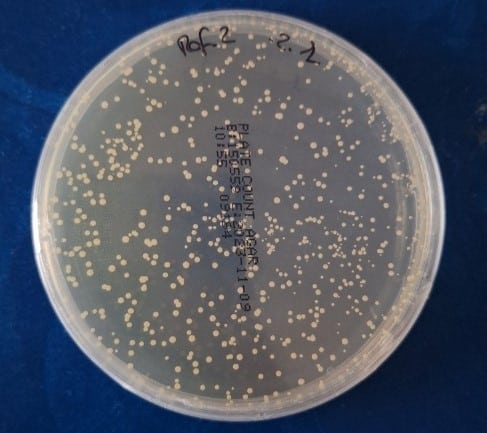
Standard material samples, including textiles and surfaces, were selected as references. These were prepared and inoculated with different microorganisms, such as E. coli, S. aureus, and C. albicans, in order to simulate realistic contamination conditions. Following the application of steam treatments, surviving microorganisms were quantified using culture methods and microbiological analyses, including colony-forming unit counting.
Place after the paragraph discussing microbiological quantification.
The comparison between steam-treated samples and untreated control samples allowed determination of the percentage of microbial reduction associated with each configuration evaluated. This process enabled identification of performance variations depending on material type and operational configuration, distinguishing between optimal behavior and situations where performance was influenced by specific factors.
Data interpretation led to the formulation of recommendations aimed at improving system stability and consistency. The analysis went beyond confirming functionality, examining the elements that determined actual effectiveness and identifying available margins for technical optimization.
Structured improvement of system performance
Optimization efforts resulted in the definition of more efficient operating configurations and a reduction in technical uncertainty associated with system performance. The developer obtained objective information to adjust critical parameters and strengthen the product’s technical robustness.
Key benefits included improved reproducibility and a clearer definition of application limits. This clarity is essential to prevent discrepancies between expected and actual performance in the market.
Furthermore, the project enabled the anticipation of potentially critical usage scenarios, allowing preventive measures to be implemented before commercial launch. INFINITIA provided a structured analytical framework aimed at enhancing performance and reducing technological risks associated with system deployment.
The information obtained not only enabled parameter optimization, but also provided a solid foundation for process improvement and product improvement , supporting data-driven strategic decisions prior to full market implementation.
This approach provided clear and quantifiable data, helping the client improve their product and define optimal parameters to ensure effective disinfection in textile products and surfaces.