
What was the challenge or problem to be solved?
In certain industrial manufacturing processes, even small variations in materials or mechanical properties can lead to critical issues during component assembly, resulting in failures in metal parts. When this happens, production stability is compromised, as defective components force production line stoppages, material reviews, and adjustments to manufacturing conditions.
In this context, an industrial company identified a recurring issue during the assembly of specific metal components. During the process, some parts broke unexpectedly, causing production delays and increasing costs associated with rework and component replacement. Faced with this situation, it was essential to investigate the root cause of the problem in order to implement effective corrective actions.
Metal part breakage during the assembly process
The issue appeared at a specific stage of the assembly line. Certain metal parts, designed to withstand standard assembly stresses, began to fracture during installation. This behavior was particularly concerning because neither the component design nor the assembly conditions had changed, suggesting that the root cause lay in a less obvious factor within the production process.
In industrial environments, the sudden occurrence of breakages in metal parts often indicates some form of alteration in the material or manufacturing process. These changes may be related to variations in metal composition, microstructural differences, inadequate heat treatments, or irregularities in surface coatings affecting the mechanical performance of the component.
Breakages during assembly are often the first indication of an issue in the material or manufacturing process.

The difficulty in these situations lies in the fact that a single symptom, component breakage, can have multiple possible causes. Without a detailed technical investigation, any attempt to fix the problem may be ineffective or even introduce new issues into the production process.
For this reason, the client required a study to understand what was causing these failures and how they could be prevented. Identifying the root cause would not only resolve the current issue but also prevent recurrence in future production batches and ensure component reliability in its industrial application.
Technical diagnosis of failures in metal components
To address this type of industrial issue, it is essential to carry out a comprehensive technical diagnosis that evaluates both the material and the mechanical behavior of the component. This approach allows determining whether the failure is related to the raw material, the manufacturing process, or any alteration in the component properties introduced during production.
The investigation focused on comparing failed parts with others from previous batches that did not show any issues. This comparative analysis is widely used in forensic engineering, as it helps identify differences that explain the abnormal behavior of defective components.
In addition, the study considered multiple levels of analysis. It was necessary to evaluate the chemical composition of the material, its internal structure, its mechanical properties, and potential microstructural variations that could affect its strength or ductility.
Only through a systematic investigation could it be determined whether the breakages were related to the material used, manufacturing conditions, or an undetected change in the supply chain. This approach reduces uncertainty and supports decision-making based on technical evidence.
Complexity in investigating failures in metal parts
Investigating failures in metal components requires analyzing multiple factors that can influence material behavior. In many cases, the causes are not immediately evident and require combining different characterization techniques to identify the origin of the failure.
For example, variations in the microstructure may modify mechanical resistance, while changes in chemical composition can affect ductility or brittleness. Similarly, irregularities in coatings or differences in material thickness can create stress concentrations that promote fracture during assembly.
For this reason, the study followed a structured approach to evaluate each potential cause. The objective was to progressively rule out hypotheses until identifying the factor responsible for the abnormal behavior observed during assembly.
The INFINITIA team addressed the investigation by applying forensic engineering and material characterization methodologies to reconstruct material behavior and determine the origin of the failures detected in the production line.
How was it addressed or what was the solution?
To resolve the issue detected during assembly, the INFINITIA technical team designed an analysis strategy based on comparing defective parts with those that showed no issues. This approach allows identifying relevant differences in the material or its properties that may explain the observed behavior.
The study was carried out through several analysis phases, each focused on evaluating a specific aspect of the metal component. The combination of different characterization techniques made it possible to build a comprehensive understanding of material behavior and detect anomalies responsible for the failure.
Visual inspection of failed and non-failed parts
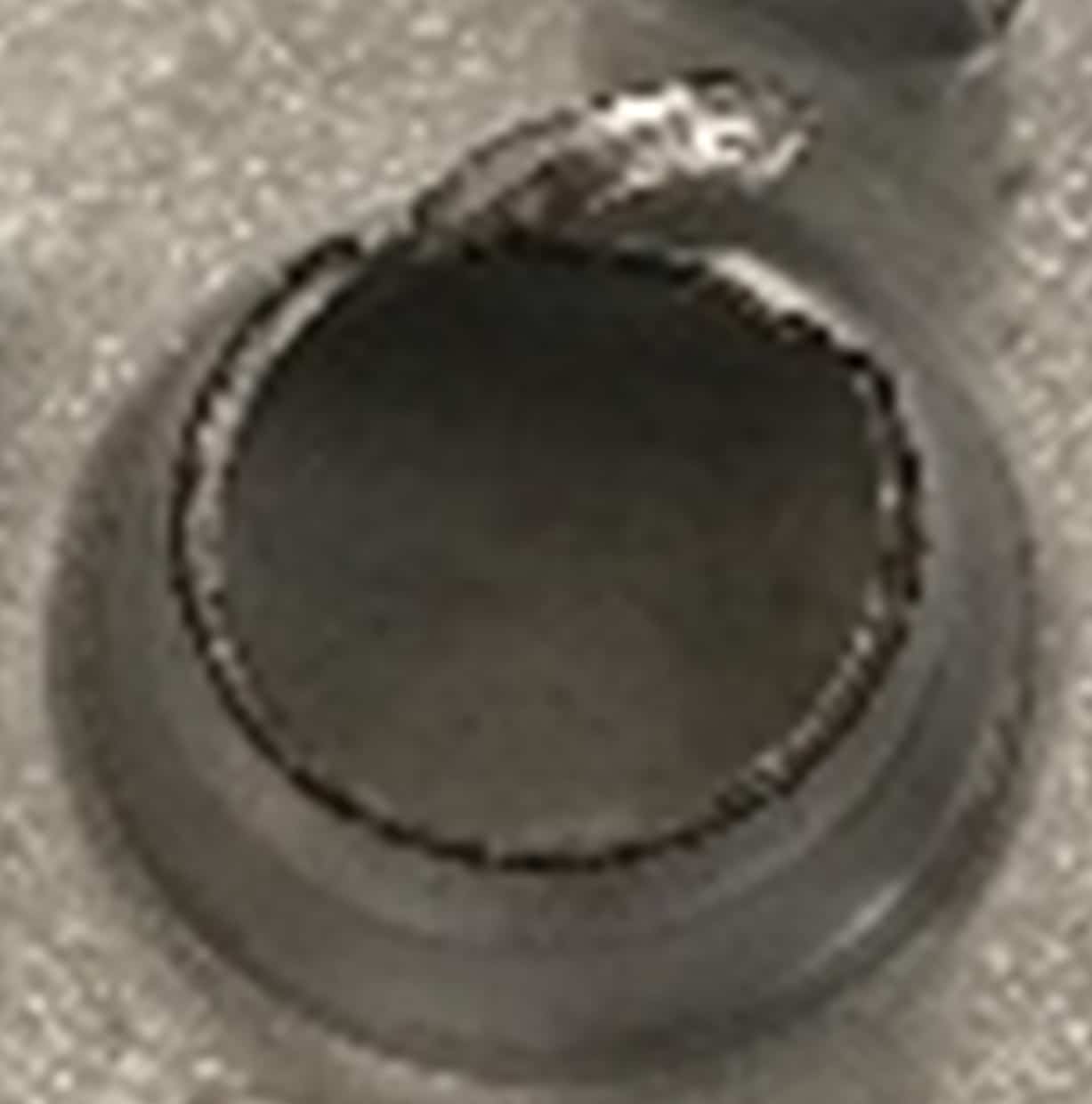
The investigation began with a detailed visual analysis of the parts that had broken during assembly. This type of inspection is often the first step in failure analysis studies, as it can provide relevant information about the type of fracture and the conditions under which it occurred.
Using optical microscopy, both defective parts and parts from previous batches without issues were examined. The objective was to identify visible differences in fracture surfaces, component geometry, or deformation associated with failure.
This analysis revealed certain irregularities that helped guide subsequent stages of the investigation. In particular, the observed fracture characteristics provided insight into the type of failure occurring, allowing hypotheses to be formulated regarding material behavior during assembly.
Additionally, this initial phase confirmed that the issue was not solely related to the assembly process but likely linked to the material itself or its manufacturing conditions.
Metallographic characterization and material composition
Once the visual inspection was completed, the study focused on analyzing the internal characteristics of the material. Analyses were performed to verify whether the chemical composition of the metal matched the expected specification for the component.
The composition analysis confirmed whether the alloy used in manufacturing met the required standards. Variations in chemical composition can significantly affect mechanical behavior, influencing strength, ductility, and deformation capacity.
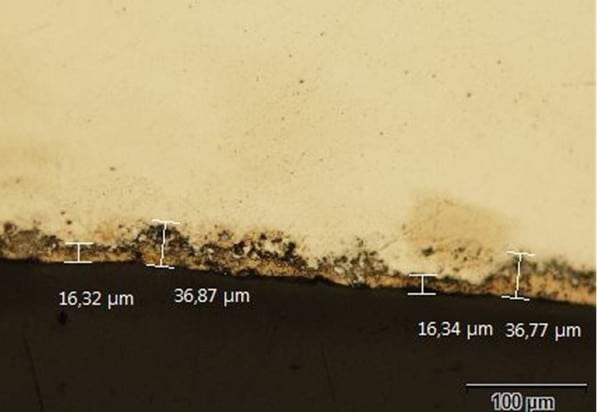
Subsequently, the cross-cut technique was applied, involving transverse sectioning of the material for analysis using electron microscopy. This allowed evaluation of sheet thickness, coating uniformity, and potential microstructural irregularities.
Metallographic analysis reveals internal material irregularities not visible to the naked eye.
This type of metallographic analysis is particularly useful for detecting internal defects, material heterogeneities, or variations in treatments that may affect component performance.
Mechanical properties evaluation and root cause identification
The study concluded with a detailed evaluation of the material’s mechanical properties to determine whether significant differences existed between defective and non-defective parts.
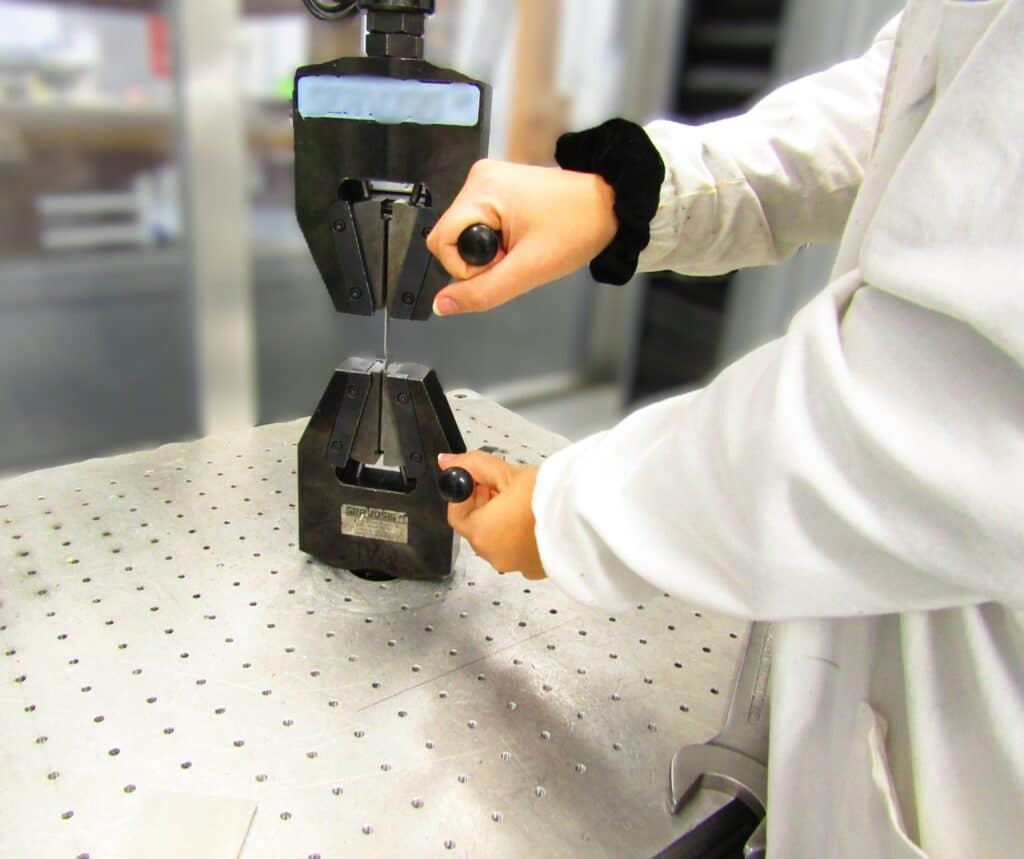
Microhardness measurements were carried out using a microdurometer. This technique allows assessing material resistance at a microscopic scale and detecting variations related to heat treatments or microstructural differences. Tensile tests were also performed using a universal testing machine to analyze material behavior under mechanical stress and compare deformation curves between samples.
Comparing failed and non-failed parts helps identify material differences.
Finally, ferrite content was measured using a specialized device. The presence of certain phases in the material can influence its mechanical behavior, completing the overall material characterization.
The integration of all results made it possible to understand the differences between defective and non-defective parts. This comparative approach enabled the identification of the root cause and provided the client with the necessary information to implement corrective actions. As a result of this corrective analysis, the client decided to define and implement a series of preventive controls and material analyses aimed at detecting deviations before parts reach the assembly stage, thus avoiding breakages in production.