
What was the challenge or problem to be solved?
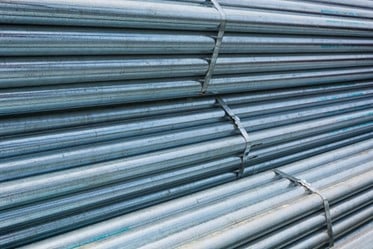
In an industrial environment with high manufacturing rates, incidents began to be detected in certain galvanized steel components. Although the technical documentation indicated compliance with specifications, some batches generated deviations on the production line, affecting process stability and increasing nonconformity.
It was necessary to determine whether the root cause was linked to the material, the coating, or its interaction with the manufacturing process, with the objective of reducing variability and enabling well-founded technical decisions.
Failure analysis in production
The case clearly fell within a failure analysis in production context, where the impact extended beyond an individual part and affected the overall performance of the system. The incidents led to line interruptions, additional adjustments and increased rework, resulting in higher operating costs.
The initial challenge was to determine whether the origin of the problem was internal, related to the client’s manufacturing process, or external, associated with differences between supplied batches. This distinction was critical to avoid premature decisions such as unnecessary line modifications or supplier replacement without sufficient technical basis.
Variability between batches can compromise production stability even when specifications are nominally met.

It was also necessary to assess whether the observed phenomenon corresponded to normal variability within acceptable industrial tolerances or, conversely, whether there was a significant deviation justifying structural corrective action.
The expected benefit was twofold: restoring production stability and providing the technical department with solid, evidence-based arguments for decision-making.
Comparative analysis between galvanized steel batches
To address the issue rigorously, a comparative analysis between galvanized steel batches was carried out, selecting representative samples from both batches associated with incidents and those that had not generated problems.
This comparative approach was essential. Analyzing only nonconforming samples would have limited the ability to identify real differences, as any observed feature could have been interpreted as inherent to the material rather than the cause of failure.
The objective was to identify variations in parameters such as the chemical composition of the base steel, characteristics of the galvanized coating, thickness, homogeneity, or possible surface discontinuities. Small differences in these aspects can translate into distinct behavior under certain mechanical loads or assembly conditions.
From a strategic perspective, this analysis made it possible to redefine material acceptance criteria and establish controls better aligned with the actual needs of the production process.
Metallic material characterisation in galvanized components
The most relevant technical challenge was to perform a metallic material characterisation detailed enough to detect subtle differences that were not evident through conventional inspections.
In galvanized components, the interaction between the base steel and the coating is decisive. Variations in the steel microstructure, in the composition of the intermetallic layer, or in coating adhesion may influence performance during subsequent operations.
The complexity of the case lay in the fact that the batches nominally complied with the declared specifications. Therefore, the analysis had to go beyond simple document verification and delve into microstructural and physicochemical aspects.
INFINITIA addressed this challenge through a structured approach aimed at correlating analytical data with the actual behavior observed in production. The key was not only to measure, but to technically interpret the results within the specific context of the client’s process.
¿Cómo se abordó o cuál fue la solución?
Once the scope of the study was defined, an analysis strategy was designed to isolate variables and establish direct comparisons between samples. The approach avoided initial assumptions and prioritized the acquisition of objective data to support any conclusion.
Failure analysis methodology in galvanized steel
The failure analysis methodology in galvanized steel was structured into several complementary phases. It began with a macroscopic evaluation aimed at detecting visible irregularities and continued with microstructural studies to further examine the characteristics of the base steel and the coating. This progressive approach established an objective basis before formulating technical hypotheses.
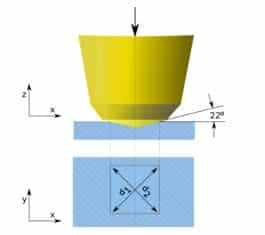
A systematic comparison was carried out between conforming and nonconforming batches, analyzing parameters such as coating thickness, morphology of the galvanized layer and possible discontinuities. Mechanical properties such as hardness were also evaluated, including Vickers hardness testing, to determine potential differences in base steel behavior between batches.
Differences not visible to the naked eye can be detected through mechanical testing and microstructural analysis.
The correlation between these data and production performance made it possible to rule out preliminary explanations and focus the investigation on differences with potential functional impact. The selection of analytical techniques responded to the need to relate material properties to actual line performance. In addition, consistency of results across different samples from the same batch was assessed to determine whether deviations were isolated or indicative of a systematic trend.
Execution of the comparative analysis of metallic materials
During the execution of the comparative analysis of metallic materials, INFINITIA’s technical team worked under a continuous contrast logic between analytical data and production behavior. The objective was not only to characterize the material, but to understand how specific variations could influence the final outcome of the process.
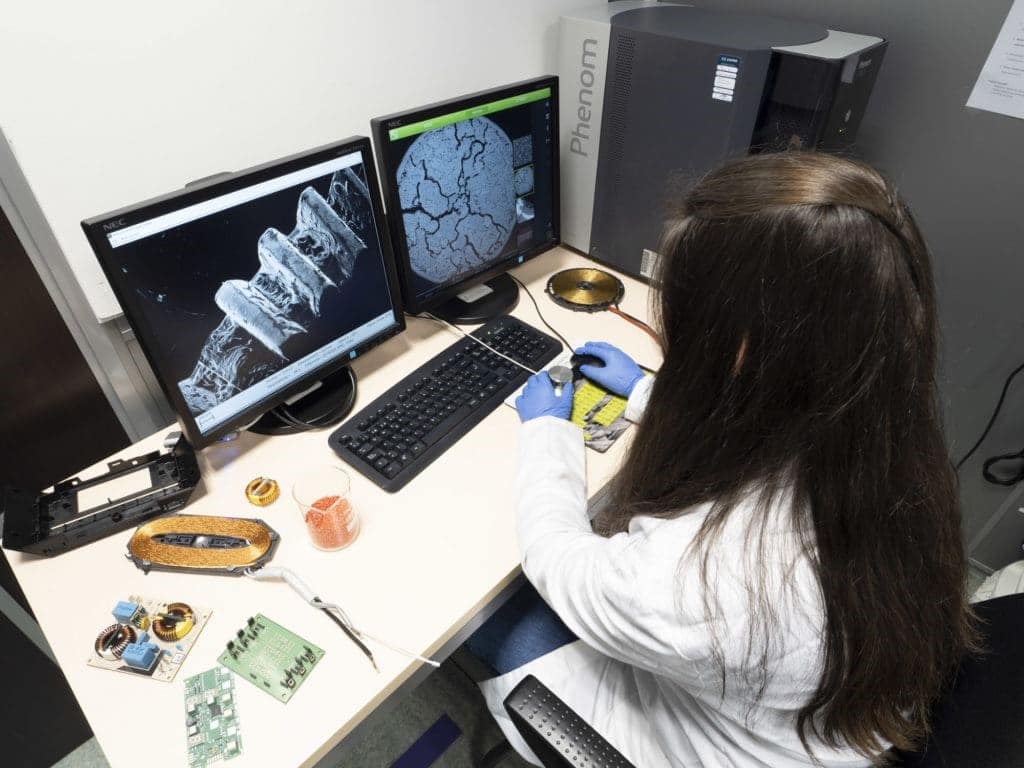
Chemical compositions, microstructural characteristics of the base steel and parameters of the galvanized coating were studied. Advanced techniques such as scanning electron microscopy (SEM-EDX) with energy-dispersive X-ray analysis were employed to analyze coating morphology and elemental composition with greater precision. Although some differences could be considered minor in general terms, their impact had to be evaluated within the specific use context, where small variations may be amplified under certain operating conditions.
Small variations in composition or coating can lead to significant impacts under real operating conditions.
Technical interpretation was decisive in distinguishing between variability inherent to the galvanizing process and deviations with real impact. The team translated complex technical results into clear operational conclusions, enabling informed decisions regarding batch acceptance and future technical criteria.
Industrial quality control through technical characterisation
The study reinforced industrial quality control by defining technical criteria aligned with the real demands of the production process. Detailed characterisation provided an objective basis to review specifications and adjust incoming material inspection controls.
Based on the identified differences, more precise acceptance parameters were established for future supplies, reducing the likelihood of introducing batches with critical characteristics into the production line. This measure helped minimize exposure to undesired variability.
The project not only resolved the specific incident, but also provided a more robust structure for managing variability between suppliers and batches. As a result, production stability improved and technical uncertainty associated with the material was reduced.